

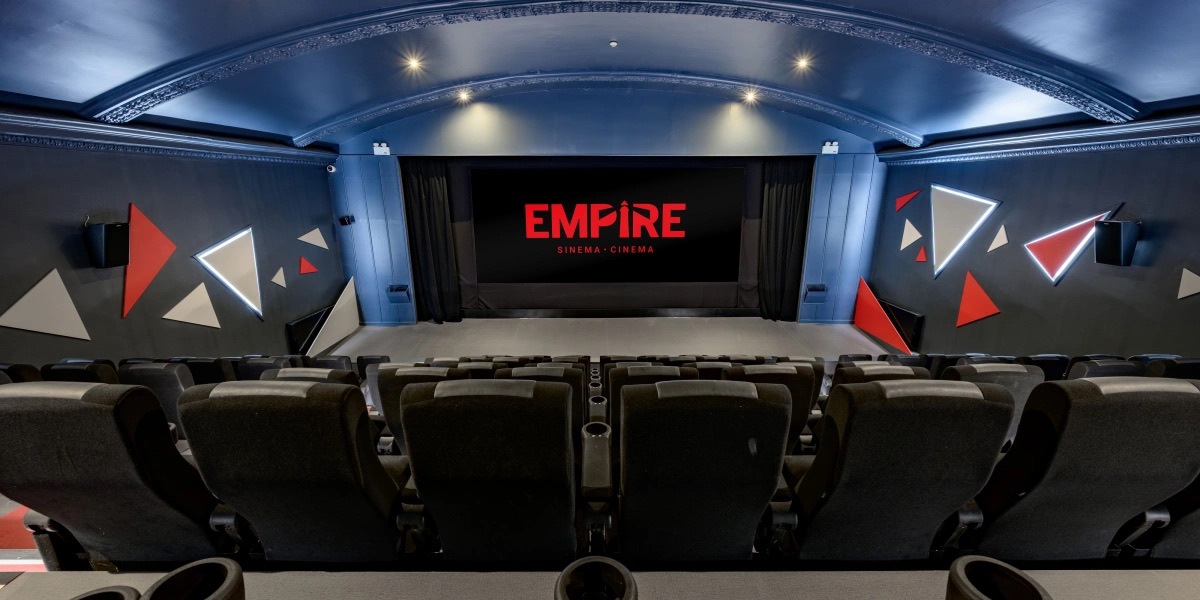
The Empire is a one-screen cinema on Stanley Street in Holyhead, run by Holyhead Town Council, with a busy play centre under the same roof. New films arrive most weeks. Times change. Family films, late shows, Christmas specials.
Most of the people deciding what to see are on a phone, often deciding today. They want one answer, fast: what's on tonight, and how do I book?
That is a simple question with a surprisingly awkward answer behind it.
Two sources that never quite agree
A cinema's programme lives in two places.
The booking system knows the hard facts: which showings are on sale, at what time, with what certificate. But it only knows about a film once tickets are on sale.
The film booker knows what is coming. Each week a programme update lands by email as a spreadsheet: which films play which weeks, often well before tickets exist. It is written by a person, for a person. "DISNEYS HEXED". A stray slash after a title. Dates with no year.
Keeping a website in step with both means someone retyping listings every week, and reconciling the two whenever they disagree. In a small council team, that person does not exist. So cinema websites fall behind, and people phone up, or give up.
What was built
A website that rebuilds itself every morning.
At 06:00 it reads the booking system's public listings feed and rewrites every page: tonight's films, the week ahead, Coming soon, and a page for every film with its poster, certificate, running time and every showing. The sitemap and the details Google reads are rewritten with it, so search results stay as current as the site.
Every showing time is a button. One tap opens booking, inside the cinema's own website.
When the booker's spreadsheet arrives in the inbox, it is picked up automatically, read, and folded into the programme. Films announced weeks ahead appear under Coming soon straight away, marked "tickets soon".
Nobody logs in. Nobody retypes anything.
The part that matters most: AI does one job
It would have been easy to point AI at everything. That would have been a mistake.
Times, dates, certificates and booking links come straight from the booking system, exactly as written. No interpretation, no guessing. Those are facts a customer will act on, and plain rules handle them perfectly.
AI does the one job rules cannot: reading the booker's spreadsheet. It turns informal week blocks and shorthand titles into a clean list of films and weeks, then matches them against what the booking system already knows.
An exact match goes straight on the site. Anything the AI is not sure it read correctly is held back, and a person gets one email with a page to approve or reject it. One email per update, never one per film.
AI should do the one job rules can't. A person should only see what the machine had to interpret.
Two sources, one simple rule
Where the booking system has showings, it wins. It is what people can actually book.
Where it has nothing yet, the booker's programme stands, and the site says so honestly: "tickets soon", or "times soon" on the day itself. When the real times land in the booking system, they replace the note the next morning. No one touches it.
What it deliberately won't do
The booking feed carries more than listings. The website takes only what it needs and discards everything else the moment it reads it. No "selling fast", no seat counts, nothing that was never meant to be public.
It also refuses to publish a bad day. If the feed ever comes back empty, broken, or suddenly missing half its films, the site keeps yesterday's good listings and sends a single alert. If two days pass without a good update, every page shows a calm line with the box office number. Never an error page.
And before any page goes live, a final check scans every word for the house rules: 24-hour times, the right booking link, nothing that should not be there. If anything fails, yesterday's site stays up.
For the things a feed can't know
Some of the best nights are not in any feed. The Polar Express pyjama screening, with breakfast at the play centre next door, is not sold through the usual booking page at all.
Events like that live in one short file that a person edits. They appear on the home page and on their own page, sit alongside the films, and drop off by themselves after the last date.
Posters are found automatically too: the cinema's own artwork first, then the booking system's, then a film database, with a designed title card until a poster exists.
Built to be looked after, not babysat
The whole site is plain, fast pages served from ordinary hosting. No heavy platform, no monthly plugin bill, no admin screen to learn. Every part of the pipeline is covered by automated tests that run before any change goes live.
The council's job is running a cinema. The website's job is to keep up with it.
Could this work for your business?
If your information lives in one system, your plans arrive in a spreadsheet or an email, and your website depends on someone retyping both, there's a version of this that fits. Get in touch for an honest answer on whether it makes sense.
Get in touch