

Work › AMP Construction & Groundworks
A website that looks the size of the firm.
A custom WordPress site for a family-run construction and groundworks company on Anglesey. Contracts, homes for sale, and accreditations each have a proper home, and a small office team keeps every word of it up to date.
At a glance
- Client
- AMP Construction & Groundworks Ltd
- Sector
- Construction and groundworks
- Location
- Anglesey, North Wales
- What we did
- Website design and build, content migration, SEO, and a staff manual and training
- Live site
- ampconstruction.co.uk
A contractor and a housebuilder under one name.
AMP Construction & Groundworks is a family-run company on Anglesey with more than 40 years behind it. They work as contractors on other people's builds, from housing to schools, and they also build and sell homes of their own. Their old Joomla site did not reflect the size or quality of that work, and it did little to separate the two sides of the business.
In construction, the contracts you have delivered and the accreditations you hold are what win the next job. Those needed to be front and centre, and easy to keep current as contracts finish and certificates renew.
A small office team runs the site day to day, so they needed to manage all of it themselves, without phoning us every time a contract finished or a new home went on sale. And the move could not cost them the Google visibility the old site had built up.
Signed off before it was built.
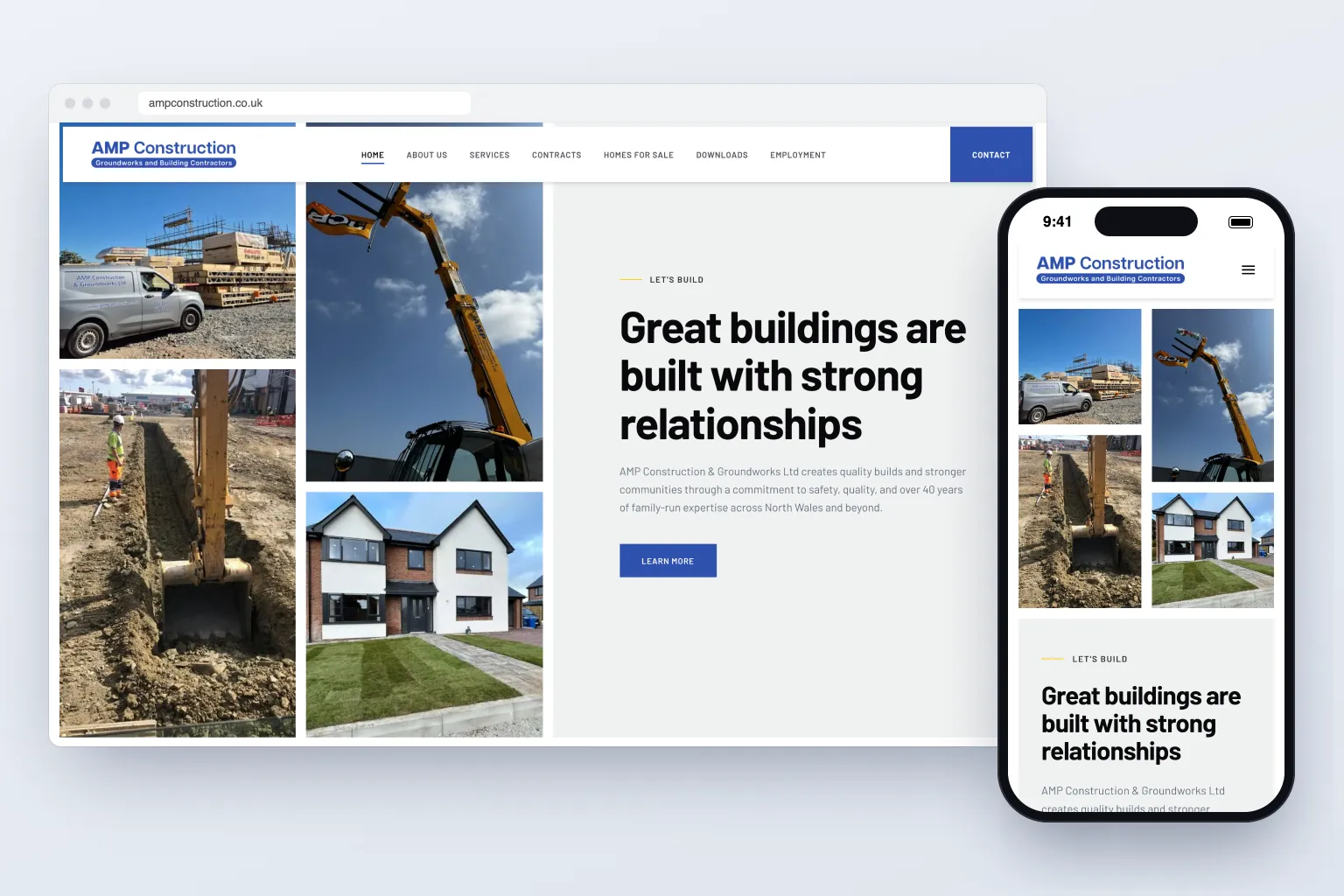
We designed the new look as a working prototype first: a clean, framed layout with a sticky header, big photography from AMP's own sites, and statistics that count up as you scroll to them.
Once Kerry Parry, AMP's General Manager, had approved it, we rebuilt it in WordPress to match the approved design, and checked the match with automated screenshot comparisons at phone, tablet, and desktop sizes. The team got the site they signed off, on a platform they can run themselves.
Every contract laid out the same way.
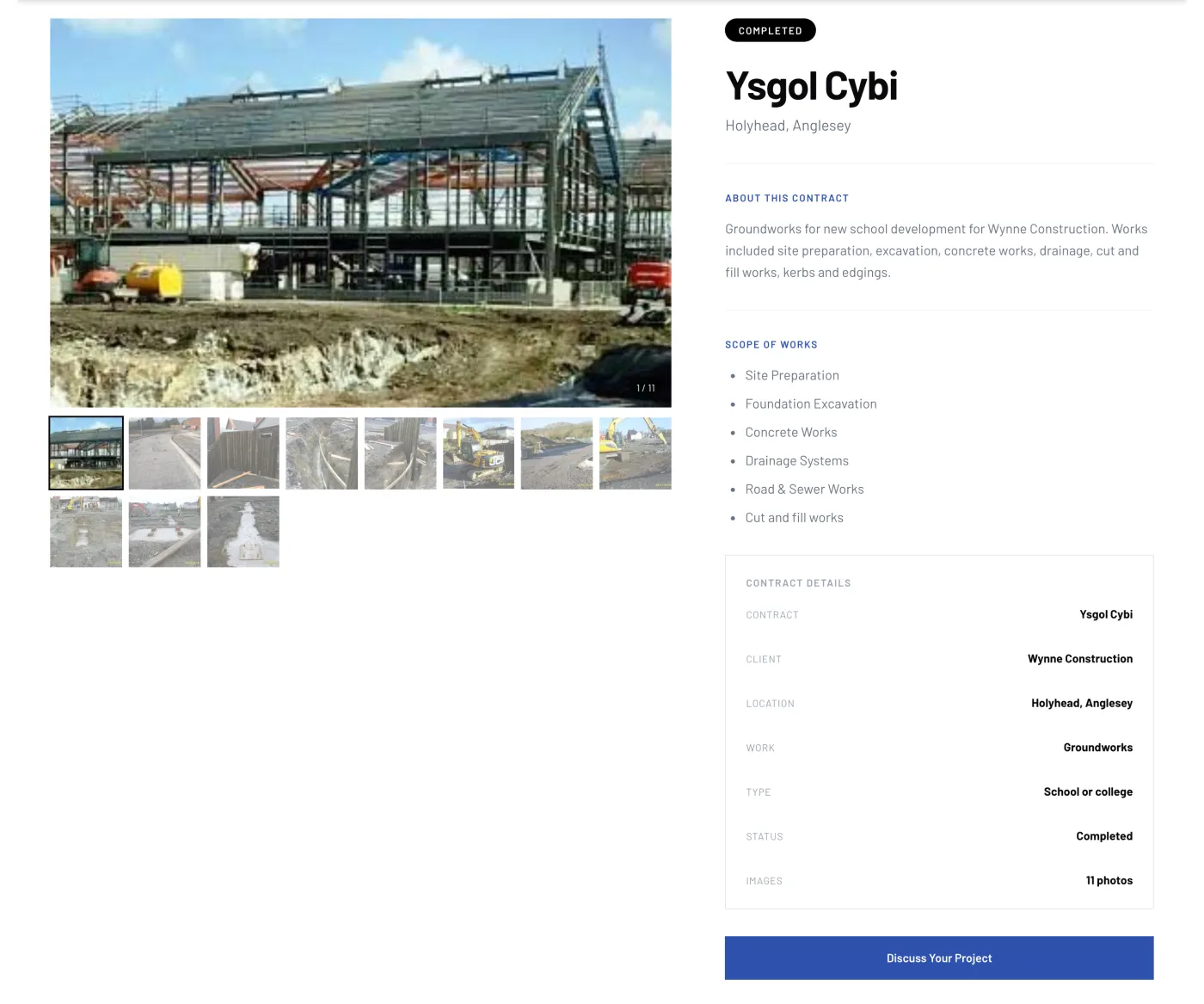
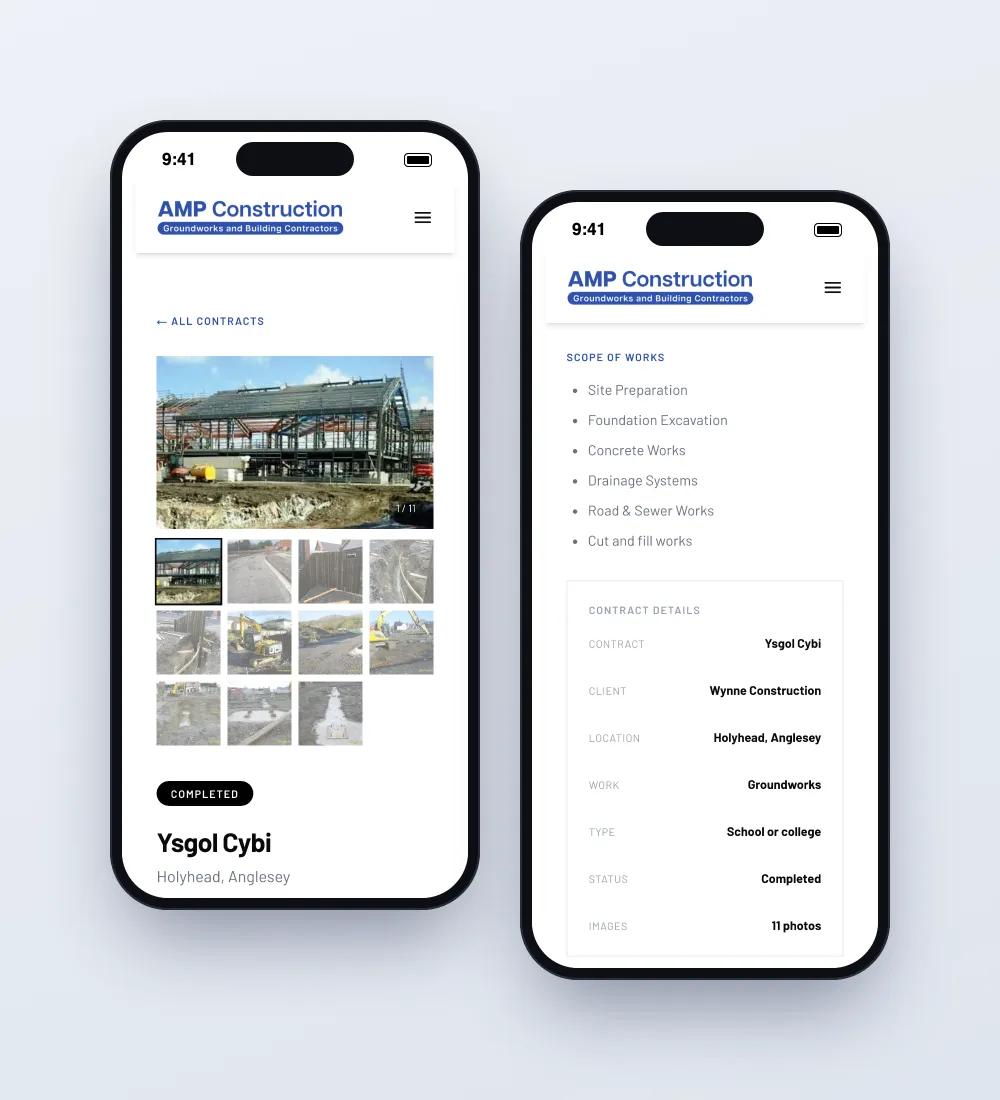
Contracts have their own section, split into current and completed, with featured contracts on the homepage. Each one opens on a photo gallery and a clear panel of facts: who the work was for, AMP's role, what was built, the number of homes, when it started and finished, and the scope of works.
Each fact is its own field. The team fills them in, the site lays them out consistently, and any row left empty simply drops out. Photos are dragged into order, and the first one automatically becomes the cover shot.
Homes for sale, kept apart from the contracts.
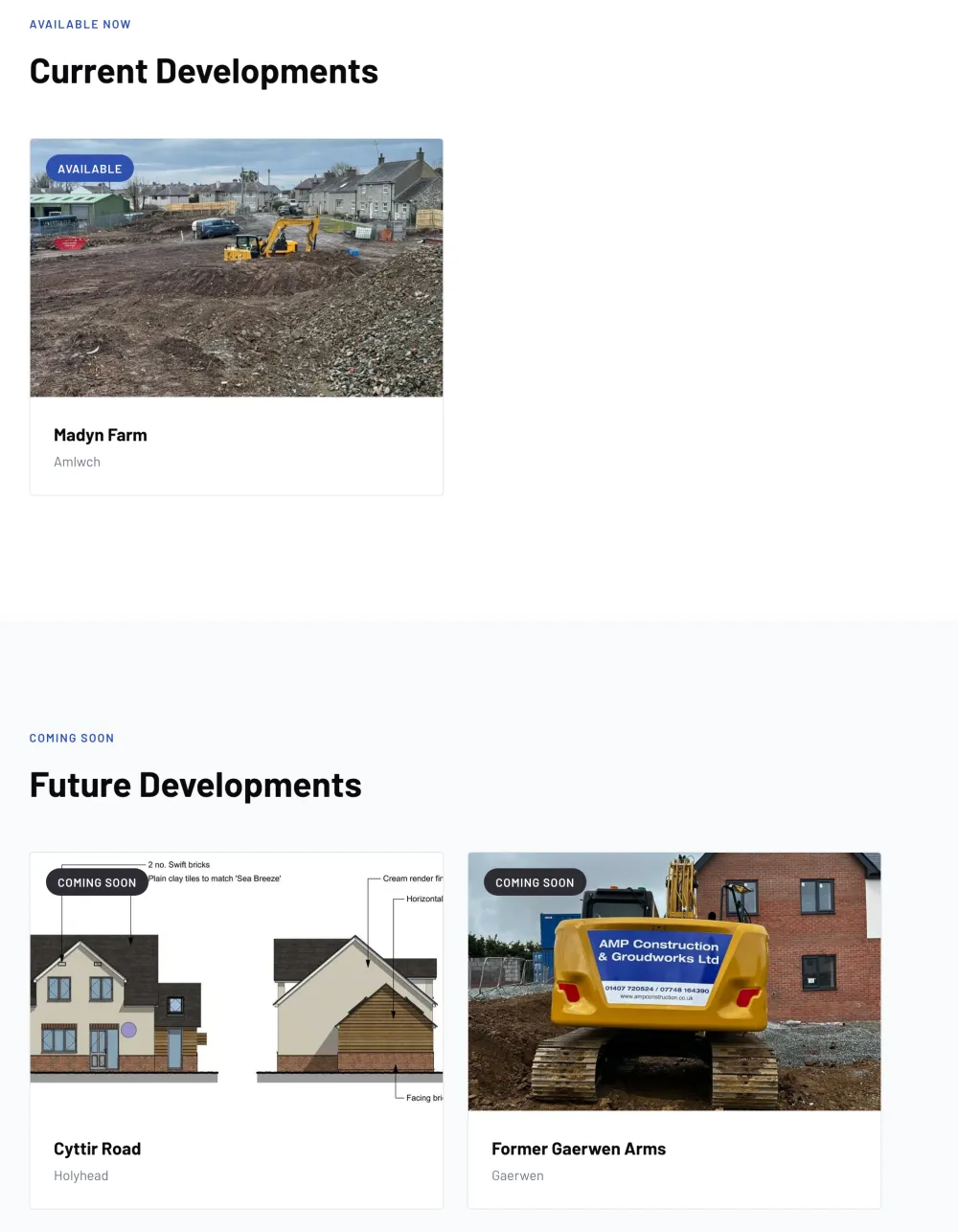
AMP's own housing has its own section, built the same way. Each development is marked Available, Coming Soon, or Sold with a colour-coded label, and carries the number of homes, bedrooms, "from" pricing, the types of home, and a link to the selling agent.
A family looking for a new house and a main contractor looking for a groundworks partner now land in different places, and each finds what they came for.
Credentials where buyers look for them.
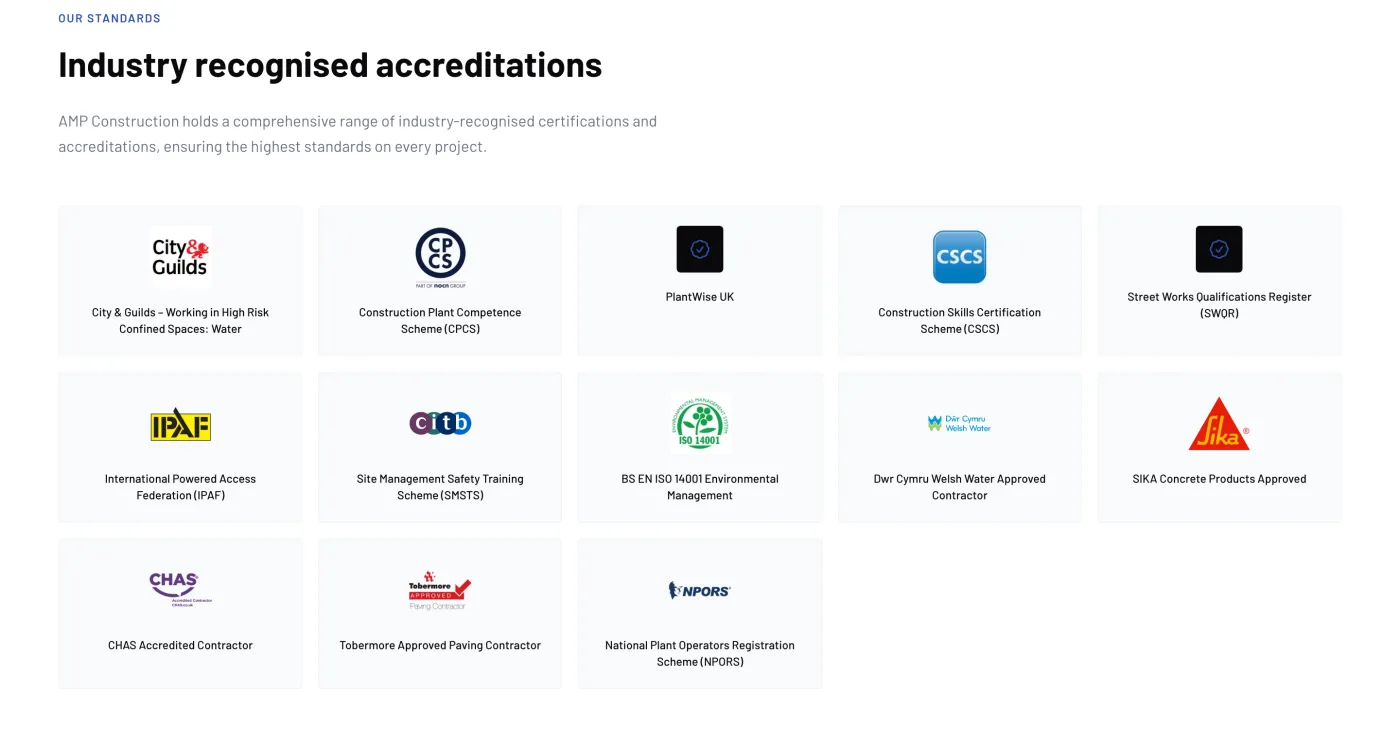
A standards section shows every accreditation AMP holds, from CSCS and CHAS to ISO 14001 and Dwr Cymru Welsh Water Approved Contractor status, each with its logo.
Certificates, policies, and approvals sit in a downloads area grouped by type, so a buyer or a procurement team can find what they need without having to ask.
Every word on the site is theirs to change.
Headings, introductions, buttons, form labels, statistics, services, contracts, homes, accreditations, and downloads are all editable in WordPress. We audited every visible string on the site to make sure of it, and filled each edit box with the words the site already shows, so there is never a blank box sitting next to live text.
During training, Kerry went to file a contract as a pub and found that "Pub" was not on the list of building types. We made those lists editable by the team the same afternoon, so the next new category is one she can add herself.
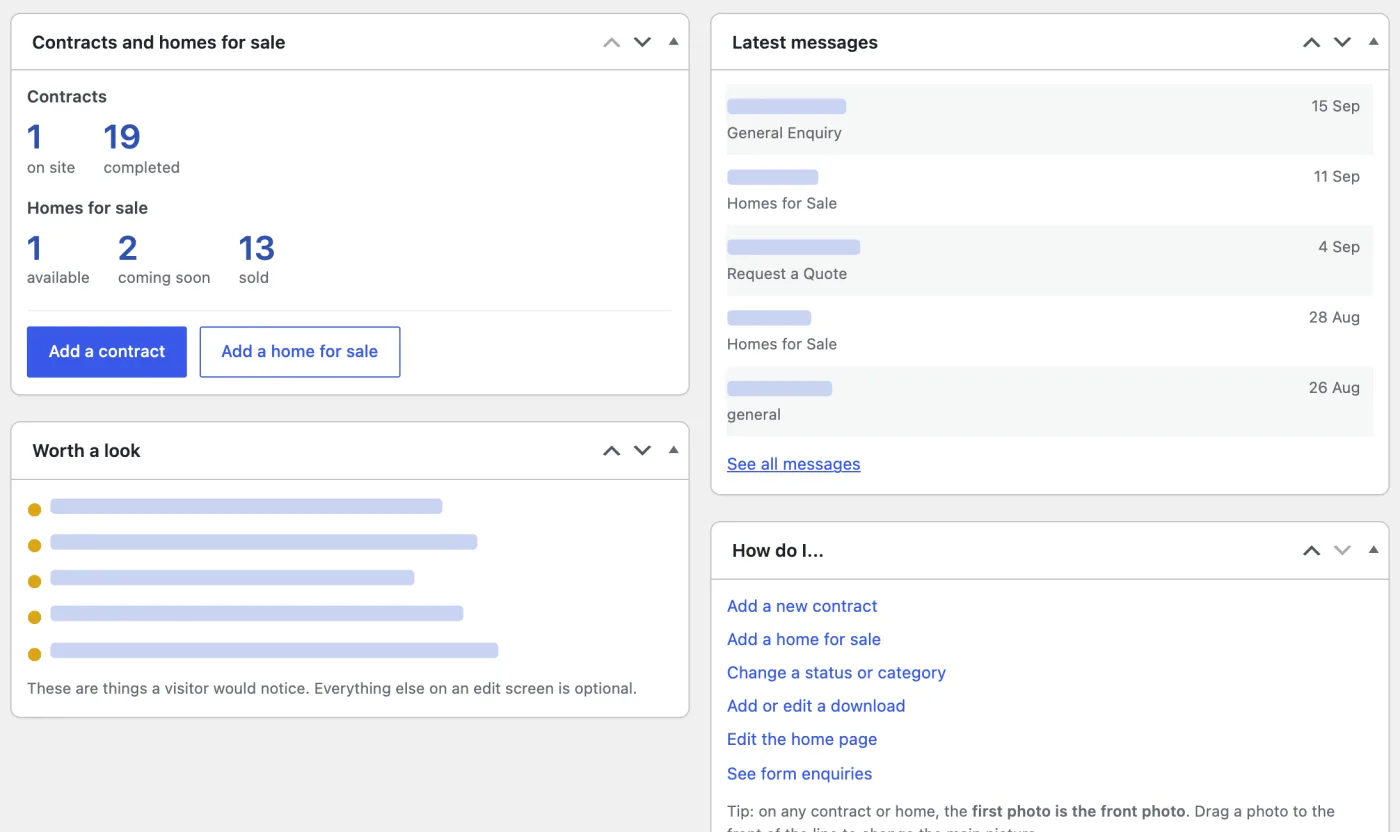
The team signs in to a Website Editor account that shows only what they need, with the technical settings tucked out of reach. Their dashboard is built around the job: contract and home counts with quick Add buttons, the latest enquiries, how-to links, and a Worth a look panel that flags anything a visitor would notice, such as a contract with no photos or a home on sale with no price.
Enquiries kept safe, and search rankings carried across.
Every contact form submission is saved inside WordPress before the email goes out, so an enquiry is never lost to a failed email. Spam protection is built into the form.
Google still had the old Joomla addresses indexed, so each one now redirects to its matching new page, every old contract link included, and the rankings and links the old site built up carry across. Page titles, descriptions, social sharing previews, a sitemap, and construction business structured data are built into the theme, and images are served in modern formats at the right size for each screen.
Just as clear on a phone.
The whole site is responsive, and a contract reads as well on a phone as it does on a desktop: the gallery first, then the scope of works and the contract details, one after another.
Handed over properly.
We wrote a 27-page illustrated staff manual, with every screenshot taken from the team's own view of the admin, and followed it with a one-to-one training session. Afterwards, Kerry told us she found the site easy to update.
Make the website as solid as the work.
If your site undersells the jobs you have delivered, or your office waits on someone else to update it, a half-hour call is enough to see what would fix it. It is free. If there is more to untangle, the Systems and Automation Audit looks at how the office runs and finds what is worth fixing, connecting, or automating.